Showing posts with label CHURCHES AND SHRINES. Show all posts

Sunday, October 21, 2012

St. Francis of Assisi Parish Church

St. Francis of Assisi Parish Church in Ma-a, Davao City

This is the St. Francis of Assisi Parish Church in Ma-a, Davao City dedicated to St. Francis of Assisi  (1182-1226) - a well-loved Italian saint among Catholics widely known for his humbleness, extraordinary kindness, and great love for animals. He bore in his body the stigmata or the Holy Five Wounds (marks of the nails and spear) of Jesus Christ. Francis was declared a saint by Pope Gregory IX after his death in 1226.

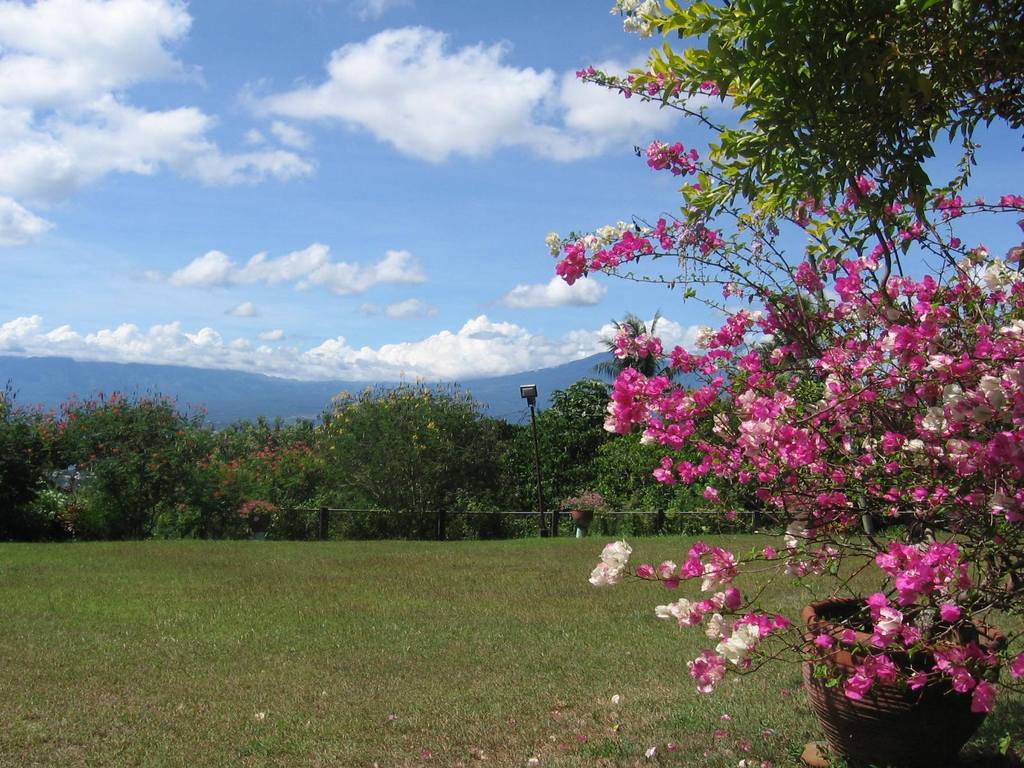
St. Francis of Assisi Parish church is the only church in Davao City that has a garden altar. The Church is a widely popular venue for garden church weddings. It is located at the corner of Don Julian Rodriguez Avenue and Carlos P. Garcia Highway in Ma-a, Davao City. The Parish Office is open from Tuesday to Sunday between 8:00 AM to 5:00 PM.

For more information, please contact:

St. Francis of Assisi Parish Church
Don Julian Rodriguez Avenue corner Carlos P. Garcia Highway
Ma-a, Davao City 8000 Philippines
Tel 244 1147 | 440 1285

Tuesday, August 14, 2012

Caraga Church

Caraga Church

The old stone Church of Caraga, also known as San Salvador del Mundo Church (Christ, the Saviour of the World), is one of the chief attractions in the town of Caraga in Davao Oriental because of its historical importance and significance not only for the province and the island of Mindanao but for the whole country, as San Salvador del Mundo Church is where Christianity began in the eastern part of the Philippines. It is located at the heart of Poblacion (town center) of Caraga, about the 70 meters from the edge of a high promontory overlooking the Pacific Ocean. It is the oldest stone church and one of a few remaining Spanish colonial era churches in Mindanao. It was built in 1884 by a priest by the name of Fr. Pablo Pastells when the Jesuits took charge of the spiritual administration of the town in 1871 from the Augustinian Recollects. The Church was once used as a prison by Spaniards.

The Caraga Church is a simple structure made of coral and limestone blocks placed on top of each other, while the upper half is constructed mainly of wood. Upon the main door of the church is an inscription that bears a symbol of Christ which dates the structure's foundation in 1884. The interior has undergone much renovation since the church's centennial in 1996. Traces of the dilapidated retablos and old roofing can no longer be seen except for the remnants of narra hardwood posts and lateral walls which are still intact. 

Caraga Church Interior and Altar

The Church houses several interesting artifacts that date back during its early years in the Spanish colonial era: the Church Bell that dates back to 1802; two centuries-old giant seashells that serve as holy water font for churchgoers; an antique baptismal basin made of marble which is still in use and  kept at the baptistry located at right side near the entrance; an antique statue of San Isidro Labrador, the town’s patron saint, can still be seen in the altar; the centuries-old Baptismal registry with entries from the year 1835 up to the present which is still intact; and several antique parish records and archives which are all intact and safely kept and preserved inside a cabinet in one of the rooms of the church.

The San Salvador del Mundo Church was declared a national historical site by the National Historical Commission of the Philippines on its parochial feast day last July 16, 2012. The Church now ranks among the country's newest national historical sites: Camp Crame in Quezon City; the Schoolhouse of the Women of Malolos; the Gomburza execution site and Jose Rizal's execution site in Rizal Park; the University of Sto. Tomas foundation place; the Recoletos Church and Convent in Intramuros, Manila; and the Graciano Lopez Jaena Shrine in Jaro, Iloilo City. 

Caraga, Davao Oriental is about a six-hour travel by land from Davao City.

Saturday, August 11, 2012

Carmelite Monastery in Mati, Davao Oriental

Carmel of St. Teresa of Jesus Monastery in Mati

This is the Carmelite Monastery in Sitio Tuatua, Barangay Matiao, City of Mati, Davao Oriental. Also called Carmel of St. Teresa of Jesus Monastery, it was founded in November 21, 1987. The monastery has a total land area of 16 hectares and features a Prayer Garden where life-sized statues of the Virgin Mary, the Archangel Gabriel, and tableau depicting the different mysteries of the Rosary, from the birth of Jesus Christ to His resurrection. It is about 100 meters away from the church and can be reached by crossing a hanging bridge thereat. The statues and tableau were sculpted by Bicolano sculptor José Barcena.
The Monastery is a popular destination during Holy Week. People go there to hear Holy Mass, to pray, meditate, and offer petitions, or simply have quality bonding moments with families, friends or colleagues. It is also a favorite playground for kids.

The Altar

How to get to Mati City

Mati can be reached by taking any of the daily scheduled airline flights from Manila to Davao City, or via a regularly scheduled inter-island vessels that ply the Manila-Davao City routes. From Davao City, the easiest way to get to Mati is through the Madaum diversion road which is shorter than the Davao-Tagum highway via private transportation or overland bus ride bound for the City of Mati - approximately 165 kilometers, or about 4 hours drive from the Davao Ecoland Bus Transport Terminal in Davao City.
Church Exterior

For more information, please contact

Carmel of St. Teresa of Jesus Monastery
P.O. Box 29 
Mt. Carmel, Sitio Tuatua, Barangay Matia
Tel +6387 388 3452


Carmelite Monastery in Mati

Sunday, July 22, 2012

Lon Wa Buddhist Temple


Lon Wa Buddhist Temple is a must-see tourist attraction in Davao City. It is one of the biggest Buddhist temples in the Philippines and the biggest in Mindanao, and the most popular temple in Davao City. It is located along J.P. Cabaguio Avenue in Agdao District, some 3 to 4 kilometers northeast of the center of Davao City. 

Lon Wa or Long Hua, which means "Temple of the Dragon", is home to Kung Fu monks and nuns of the Philippine Academy of Shakya, a Buddhist religion movement. Many Chinese tourists and migrants visit this place to worship and pay respect.

The Temple's architecture is a marvel in itself. The Temple walls are laden with slabs of Italian marbles and the grounds are beautifully landscaped with lush greenery of several varieties of flowering plants and palm trees.

The Temple

At the entrance, a smiling Buddha awaits visitors to the Temple where two large lion statues close to the flight of stairs stand guard at the foreground of the temple.

Smiling Buddha

The Lion Statues

Inside the Temple is a long, high-ceiling hall of well-polished floors where a huge Buddha at the far end and a long line of several lighted candles can be seen, as well as the gold Thousand-Armed Kuan Yin where the ashes of dead members of the Temple are kept, and the intricate wood carvings that depict the life of Buddha are prominently displayed. 

Inside the Temple

The Temple is generally simple and austere. The serenity and the prevailing sweet smell of incense of the Temple make this shrine a welcome retreat away from the everyday noise of the city and the toxic demands of urban living in this otherwise predominantly Muslim region in the Philippines. 

Admission is FREE and the Temple is open to the public from 7:30 AM to 4:30 PM. A guard usually stands at the entrance gate to assist visitors inside the Temple. 


How to get to Lon Wa Buddhist Temple 

The Temple is located along J.P. Cabaguio Avenue in Agdao District, some 3 to 4 kilometers northeast of the center of Davao City and is easily accessible by public or private transportation. Jeepneys with Route 10 labels or those with signboards going either to Sasa or J. P. Cabagiuo usually traverse the route that pass by the Temple. 

For further information, please contact telephone numbers +6382 227 1314 and +6382 305 1083.


Images courtesy of, and many thanks to dinabaw of SSC-Davao

Sunday, February 19, 2012

Christ the King Cathedral in Tagum, Davao del Norte


Christ the King Cathedral

This is the Christ the King Cathedral in Tagum, Davao del Norte which is the biggest cathedral in the Philippines and where the world's largest and longest Rosary can be found. The cathedral sits on a 2 hectare donated land at the corners of Gonzales Avenue and Sobrecary Street in Magugpo, South of Tagum City, about 53 kilometers north of Davao City. It was in built in 1993 solely from donations and took 12 years to finish, in time for the celebration of the silver anniversary of the Diocese of Tagum City in 2005.

Beautiful Sculptures adorn the frontage of the Basilca

Rear portion

The Altar

The Rosary

Weighing at 2,815 kilos, and measuring 85.5 meters long, this giant Rosary is the largest and longest wooden rosary in the world. Each bead weighs 35 kg. It is made of Magcomo or iron wood that is native to the mountains of Davao Oriental and Surigao del Sur. This beautiful artwork, which  was designed by local artist Kublai Millan of Davao City, was originally intended as a project of the Knights of Columbus to commemorate the 25th anniversary of the Catholic Diocese of Tagum City in 2005.

The Cross of the Rosary

Rosary Beads

Tagum City is a First Class City in the 1st Congressional District of Davao del Norte. It was cited by the Philippine Cities Competitiveness Ranking Project as one of the 20 most viable and competitive business sites in the Philippines in 2005. Considered as one of the fastest-growing cities in Mindanao and in the Philippines, Tagum City has become a bustling hub of culture, commerce, health services, and entertainment in the Davao Region, and in the southern Philippine region.

Monday, November 7, 2011

San Pedro Cathedral of Davao City


San Pedro Cathedral is not only the oldest church in Davao City, but also the city's premier historical landmark. It was named after San Pedro (Saint Peter), the patron saint of Davao. The original structure was built in 1847 during the arrival of the Spanish Conquistadors, led by Don Jose Uyanguren. The Cathedral is situated at the very heart of the city right across the Sanguniang Panglunsod ng Dabaw (City Council) Building, and is close to several commercial establishments, hotels, shopping centers, universities, parks, a public market, etc.  Facing the church, it is bounded at the front by San Pedro Street, the oldest street in the city, Bolton Street on the left, and Claveria Street on the right. 

The San Pedro Cathedral is now recognized as a National Cultural Treasure.

San Pedro Cathedral

San Pedro Cathedral
as viewed at the corners of San Pedro (left) and Claveria (right) Streets

This magnificent Spanish-style architecture with its distinctive modern design frontal-curved solid structure was first built using nipa and bamboo in 1847 and was subsequently rebuilt in wood in the mid 1900s by the late Architect Ramon Basa until it was finally remodelled in concrete in 1964 by Architect Manuel Chiew.

Old Photographs of San Pedro Cathedral

The old San Pedro Church in 1901

The old San Pedro Church in 1950s

Old photograph of the remodeling of San Pedro Church  in 1964

The present design is reflective of the convergence of Christians and Muslims living in Davao City. The frontal-curved roofing was designed to look like the prow of a vinta gliding over waters carrying a Cross at the helm. The vinta represents the Muslim Mindanao and the Cross representing Christianity - who stand united despite differences in beliefs and perhaps ways of life but points toward the glory of God.

The Vinta

The Vinta is a vessel of ancient heritage used by Muslims in Mindanao in Southern Philippines. The bright colorful sails are representative of the rich and colorful culture of the Muslim community. The boat is usually used for inter-island transport of people and goods. 

The Bell Tower

One of the many notable sights at San Pedro Cathedral is the Bell Tower which houses an image of the Pieta, a statue of the sorrowful Blessed Virgin Mary with the dead body of her son, Jesus, on her lap, and the two concrete tablets of the Ten Commandments of God.

The Tablets of the Ten Commandments at the foot of the Bell Tower

Below the Bell Tower

Entrance to the Cathedral

View of the Entrance

Inside the Church

The Old Altar at the right wing of the Cathedral

The old altar is preserved at the right wing of the cathedral which features a collection of antique images and relics of Saint Peter and other saints.

Blessing of the Palm during Palm Sunday

View outside the Entrance of the Cathedral

The Cathedral grounds

Inside the grounds of San Pedro Cathedral are several stalls that sell various religious items such as relics, rosaries, scapulars, novena prayer books, candles, and the like.

Row of stalls that sell religious items are found within the Cathedral grounds

At the Cathedral grounds

Pigeons are common sights

Outside the Cathedral

During Sunday, portion of the San Pedro Street particularly immediately infront of the Cathedral is cordoned off from vehicular traffic due to the huge volume of parishioners who come for Mass. Here, many vendors ply their trade just outside the Cathedral, such as balloons, toys, ukay-ukay, popcorn, and all sorts of street food, etc. There are also photographers who are always ready to take photographs for a fee, of course. Masses in the Cathedral are in both English and the Visayan dialect.

Balloon vendor plying his trade at the gate of the Cathedral


Schedule of Parish Services

Daily Masses

6:00 AM - English
12:00 NN - English
4:30 PM - Visayan (Every Wednesday and 1st Friday of the Month)
5:30 PM - Visayan

First Saturday

6:30 PM - Nocturnal Eucharistic Adoration
Every Wednesday right after 12:00 NN, 4:30 PM and 5:30 PM Masses and Blessing of religious articles

Sunday

5:00 AM - Visayan
6:30 AM - English
8:00 AM - English
9:30 AM - Visayan
11:00 AM - Baptism / Confirmation
12:00 NN - English
1:30 PM - Visayan
3:00 PM - Visayan
4:30 PM - Visayan
6:00 PM - English

Individual Wedding

Everyday except Sunday at 8:00 AM
Monday at 3:00 PM only
First Friday and First Wednesday at 10:00 AM and 2:00 PM only

Baptism – Every Sunday except last Sunday of the month
Confirmation – Every last Sunday of the month

Community Wedding – 1st and 3rd Saturday of the month at 8:00 AM
Sick Call – Coordinate with the parish office

Confession – Every Wednesday and Friday at 5:30 PM to 6:30 PM
Funeral Mass, Blessing of House, Office or Building – To be scheduled at the office, preferably three days prior to said occasion.


How to get to San Pedro Cathedral

The Cathedral is very accessible as it is located at the very heart of downtown Davao City right across the Sanguniang Panglunsod ng Dabaw Building along the busy San Pedro Street where public utility vehicles are en route.


Contact Information

San Pedro Cathedral
San Pedro Street, Davao City
Contact Person Ms. Jenette Bakial
Tel (082) 226-4740

Tuesday, September 6, 2011

Shrine Hills


Shrine Hills, Davao City

Shrine Hills is a widely popular destination for meditation, prayer, or a simple relaxation amid a lush greenery of tall trees, and rich floras and faunas, and well-manicured grass atop a hilly part of the city, and where fresh and clean air abound with a magnificent view of Metro Davao and the Gulf of Davao. It is known for the site of the Shrine of the Holy Infant Jesus of Prague.


Site of the Shrine of the Holy Infant Jesus of Prague

Shrine of the Holy Infant Jesus of Prague

Shrine Hills has a chapel, and is also a seminary and meditation center for Catholics in Davao. People go there to hear Holy Mass, to pray, meditate, and offer petitions, or simply have quality bonding moments with families, friends or colleagues. It is also a favorite playground for kids.


The Shrine is surrounded by lush greenery of tall trees and manicured grass

Tall Cactus Plants

Tall trees abound at the Shrine

Rich Floras and Faunas

View of SM Davao (Blue Building) from the Shrine

View of Metro Davao with Marco Polo Hotel in the background

View of the blue water of Davao Gulf

Statue of a Saint Joseph carrying the Infant Jesus

Catholic Devotees

Devotees attending the Holy Mass

Perfect place to bond with families and friends

Dabawenyos enjoy a relaxing time with families and friends at the Shrine, and spend a "picnic-like" moment where everyone shares food, good conversation and laughter after a strenuous steep climb to the Shrine to offer prayers and petitions during Holy Week.


A favorite playground for kids

Just outside the fenced wall of the Shrine

A common sight to any churches in the Philippines
where vendors line-up and sell a variety of food outside the Shrine

Ice Cream Vendor

Shrine Hills or "Shrine", as it is fondly called by the locals, will always remain one of my family's favorite spots in Davao City closest to our hearts. Many fond memories transpired in the very cloister of this Holy Ground, and my family and I will always come back and visit the Shrine whenever an opportunity brings us to Davao City.


Let me share with you the Novena prayer to the Holy Infant Jesus of Prague, below:


O Jesus, You have said, "Ask and you shall receive, seek and you shall find, knock and it shall be opened to you." Through the intercession of Mary, Your Most Holy Mother, I knock, I seek, I ask that my prayer be granted.

(Make your request)

O Jesus, You have said, "All that you ask of the Father in My Name, He will grant you." Through the intercession of Mary, Your Most Holy Mother, I humbly and urgently ask Your Father in Your Name that my prayer be granted.

(Make your request)

O Jesus, you have said, "Heaven and earth shall pass away but My word shall not pass." Through the intercession of Mary, Your Most Holy Mother, I feel confident that my prayer will be granted.

(Make your request)


This prayer is recited at the same time every hour for nine consecutive hours in one day. It is used by supplicants with urgent requests that cannot wait for the nine days required for most novenas.


How to get to Shrine Hills

Shrine Hills is located on the hilly part of Broadcast Avenue in Matina and is very accessible to both public and private vehicles, about four kilometers or a 10-minute drive from Downtown Davao City. Many people walk all the way up to the steep incline towards the Shrine particularly on Sundays and during Holy Week on a pilgrim. 


Map to Shrine Hills


For more information, please contact

Shrine of the Holy Infant Jesus of Prague
Broadcast Avenue, Shrine Hills, Matina, Davao City
Tel (082) 297-20-54
Related Posts Plugin for WordPress, Blogger...