Showing posts with label CUISINES AND DISHES. Show all posts

Sunday, November 25, 2012

Puto Bumbong

Puto Bumbong

This special post is warmly dedicated to all Filipinos overseas who are far away from home to celebrate Christmas together with their families. And because of great distance, they continue to endure their loneliness and longing only to make things way better back home. 

Christmas is one of the most celebrated holidays in the Philippines. In fact, the country has earned the distinction of celebrating the world's longest Christmas season, with Christmas carols heard as early as September and the season lasting until Epiphany, the feast of the Black Nazarene on the second Sunday of January, or at the Feast of the Santo Niño held every third Sunday of January. 

While most people around the world think of Christmas in terms of the colors red and green, Filipinos though, view Christmas in terms of lilac and yellow as it heralds the season of the Puto Bumbong and the Bibingka

Puto Bumbong is one of the most sought after delicacies at Christmas time. After the Misa de Gallo or the early dawn mass on the nine days before Christmas usually from December 16 to Christmas Eve, people would line up to the stalls right outside the Catholic church just to have a  quick taste of this all-time favorite Filipino delicacy. It is so popular among locals and foreign tourists alike that even five-star hotels and gourmet restaurants serve them during the holiday season using the traditional Lansungan - a special steamer (photo above) usually made of tin or aluminum, mounted on a pot of boiling water with two to three protruding tubes holding the Bumbong or bamboo tubes filled with the needed ingredients and steamed through until cooked. The Bumbong is wrapped around with muslin or cheese cloth primarily to protect the hands from the heat generated by the steam when Puto Bumbong is cooked and ready to be removed from the steamer.

Puto Bumbong

Puto Bumbong is an all-time traditional Filipino delicacy made of glutinous rice cooked in bamboo tube in which it is steamed. It is elongated and quite thin in shape which results from the method it is cooked, and its distinct color is purple due to the mixture of sweet rice and black rice called Pirurutong in which it is made of. It is best served topped with a thin spread of butter or margarine, freshly grated coconut to give it texture and cuts the stickiness of the roll, and sprinkled with just a bit of Muscovado or brown sugar to give it a hint of nutty sweetness that refined sugar does not have, and then served on wilted banana leaves which will keep it warm and moist until ready to be eaten.


Ingredients for Making Puto Bumbong


  • Banana leaves cut into 2 square pieces
  • Coconut meat – fresh and grated; 2 tablespoons
  • Margarine or butter – 1 tablespoon
  • Muscovado sugar or panutsa(sugar cane sweet) – 2 tablespoons
  • Pandan leaves – 1 stalk
  • Pirurutong or purple-brown aromatic sticky rice – ½ cup
  • White sticky rice – 1 cup
  • Water – about 4 cups


Traditional Way of Preparing Puto Bumbong

Puto Bumbong is a delicacy, and therefore requires special preparation:

First Day

While cooking Puto Bumbong is fairly quick and easy, preparation is usually a three-day process. On the first day, a mixture of equal amount of sweet rice and Pirurutong is soaked in salted water overnight.

Second Day

Traditionally, a grinding stone of some kind is used to grind the rice mixture but nowadays, a blender is commonly used. Either way, the grounded rice mixture is then placed and hanged in a cotton sack for another day in order to drain excess water. On the second day, the rice mixture is grounded in a blender and then placed and hanged in a cotton sack for another day in order to drain excess water. The rice mixture should be ready the next day, and it should be moist, not dry.

Third Day

The next step is to mix it up by hands to break up any clumps. The bamboo is then filled up with the rice mixture and placed on top of the Lansungan over a pot of boiling water. Puto Bumbong is done when the rice mixture turns dark purple and sort of shrinks inside the bamboo.


Vendors selling a variety of Christmas delights outside the church after the traditional Misa de Gallo.

Saturday, November 10, 2012

Durian Pastillas of Davao

Durian Pastillas of Davao

Magnolia, the pioneering brand in Philippine ice cream since 1925, has recently launched its "Magnolia Ice Cream Best of the Philippines (BOTP) Collection" - a whole new collection of flavors showcasing the best of native delicacies in which the featured provinces are famous for, like the Macapuno Banana and Macapuno Langka of Laguna, Coffee Crumble and Tsokolate Tablea of Batangas, Mangoes and Cream of Guimaras, Ube Keso of Baguio's Good Shepherd, Caramel Cashew Fudge of Palawan, Pinipig Pandan of Pampanga, and of course the latest addition to the collection, the Durian Pastillas of Davao.
The collection is aimed at promoting the tourist spots and festivals of the different provinces in the country, in line with the Department of Tourism's (DOT) campaign, "It’s more fun in the Philippines!". The Best of the Philippines collection is available in 1.5 Liter tubs at Php 210. For more information and latest updates, please visit Magnolia's Facebook page.

Saturday, March 17, 2012

Lechón Buwaya (Roasted Crocodile)


Lechón Buwaya (Roasted Crocodile)

Lechón is a popular food in the Philippines. In fact, lechón is the country's National Dish. It is prepared throughout the year for any special occasion, during festivals, and the holidays. The word "lechón" actually originated from the Spanish term "leche" which means "milk",  thus lechón refers to a suckling pig that is roasted. The dish usually features a whole suckling pig grilled over charcoal. But nowadays, the original use of a suckling pig has given way to a medium-sized adult pig. Preparation of lechón is quite simple; after the entrails are removed, the pig is seasoned with spices which may include: "tanglad" (lemon grass) or "dahon ng sampalok" (tamarind leaves). It is then skewered in a long bamboo stem, grilled over a pit filled with hot charcoal fire and turned in a rotisserie action. The pig is roasted on all sides for several hours until done. The process of cooking and occasionally basting it with cooking oil usually results in making the pork skin crisp, giving it a distinctive aroma and mouthwatering taste.

Over the years, and just like any popular dish, the lechón also evolved. Aside from the use of pork, the lechón manok (grilled marinated chicken) has become so popular a dish in recent years that the business of lechón manok has mushroomed through out the Philippines, that every street corner is now filled with the likes of the more popular chains of Andok's and Baliwag Lechón Manok, and the list goes on . . . 

And quite recently, the city of Davao has caught much the attention of the public, and of course, the Philippine media, because of a different kind of lechón - the notoriously talked-about Lechón Buwaya (Roasted Crocodile).

Lechón Buwaya (Roasted Crocodile)

In October 2011, the Davao Crocodile Park launched its "Croctoberfest 2011" in Davao City where saltwater crocodiles were roasted in the traditional way of cooking lechón. These were farm-bred saltwater crocodiles whose skins are usually sold commercially for leather and their meat for food consumption. The Davao Crocodile Park secures special permits from the Philippine Department of Environment and Natural Resources (DENR) before these farm-bred crocodiles are slaughtered for commercial or food purposes. 

Crocodile meat is found to be low in fat, low in calories, and high in protein, and looks like a cross between roasted beef and pork and tastes like chicken - a little grainy but tender and just right. The price may well be prohibitive at PhP2,000 per kilo, but there are many of those who regard it as a delectable fare.

Grilled over hot charcoal fire

The whole crocodile was marinated overnight in beer, pineapple and calamansi juice, coco syrup, chillies, pepper corns, and various spices. Roasted over hot charcoal fire for well three hours, the croc's edible meat emits a distinctive pungent smell, strong, and penetrating. While some people may regard it as somewhat fragrant and enticing, others may find the aroma overpowering and offensive. The taste evokes reactions from deep appreciation to intense disgust.

Saltwater crocodile (Crocodylus porosus) is the largest of all living reptiles. It also known as the estuarine or Indo-Pacific crocodile, and is found in suitable habitats from Northern Australia through Southeast Asia to the eastern coast of India.

Saltwater crocodile

Saturday, July 16, 2011

Authentic Davao Food


Lip-smacking traditional Davao food

Davao City cannot be measured when it comes to eateries. It is so because the Dabawenyos' humble way of daily life dictates their simple tastes and choices of food. While roaming in and around the City, you may come to see so many lovely cafés and classy restaurants that are rich in dishing up lip-smacking traditional food along with international delights. Above and beyond, you can also relish your food with yummy wines, fruity numbers that come from the most elite and discriminating section of society loaded with big-gun ale.

Naturally, the capital city is a superlative place to dine where you are offered with choicest of cuisines available at roadside cafés and inns, chic bars, and plush eating joints. American hamburgers and french fried potatoes, Chinese cuisines, Korean food and Japanese tastes are able to satiate your hunger. The list of international specialities goes on and on and on . . . . It is okay to be fashionable and popular in dining, BUT NOT FOR ME!

Personally, I still prefer the simple and yet creatively prepared Davao everyday dishes made up of the lowly Matangbaka, Bangus, Malasugi, Tilapia, Pasayan, Alimango, Guso, Lato, Katambak, Moro-moro, Bodboron, Barileson, Lapu-lapu, Maya-maya, and the list goes on as well . . . . In my book, authentic Davao food is second to none!

Here are some of the popular dishes I came to know and love in Davao City:


Kinilaw na Tuna

Kinilaw is a popular seafood dish in Davao City. The dish is typically made from fresh, raw Tuna or Swordfish (Malasugi) marinated in vinegar and citrus juices such as lemon or lime, spiced with chili peppers (siling labuyo) and seasoned with ginger, onion, and salt.


Kinilaw Sushi Style


Sinuglaw

Sinuglaw is a contraction of the words, Sinugba (Grilled) and Kinilaw. It is a combination of fresh Tuna or Malasugi and grilled pork marinated in vinegar and citrus juices such as lemon or lime, spiced with chili peppers (siling labuyo) and seasoned with ginger, onion, and salt.


Sinugbang Panga
(Grilled Tuna Jaw)


Sinugbang Nokus
(Grilled Squid)


Sinubang Liempo
(Grilled Pork Belly)


Sinugbang Bihod
(Grilled Tuna Fish Roe)

Bihod is the fish roe of a male Tuna.


Sinugbang Bagaybay
(Grilled Tuna Fish Roe)

Bagaybay is the fish roe of a female Tuna.


Sinugbang Ikog sa Bariles
(Grilled Tuna Fish Tail)


Sinugbang Bodboron
(Grilled Mackerel Scad)


Sinugbang Pecho sa Manok
(Grilled Chicken Breast)


Inato
(Grilled Chicken)

Inato is a shorten word for "atin ito", thus "inato" or " it is our" in English. Inato is a way a chicken is cooked.


Pasayan
(Deep-Fried Shrimps)


Piniritong Ikog sa Bariles
(Deep-Fried Tuna Fish Tail)


Kinhason
(Baked Scallops)


Imbaw
(Clam Soup)


Tolang Pasayan
(Boiled Shrimps)


Sutokil

Sutokil is a contracted words of Sugba (Grilled), Tola (Boiled), and Kinilaw (Fresh Tuna fish marinated in vinegar), and is a very popular combination of dishes in Davao City.


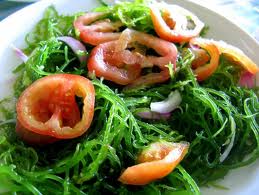
Guso
(Fresh Seaweeds made into salad)


Lato
(Another variety of Seaweeds made into salad)


Law-Uy
(Cooked vegetables)

Law-Uy is an all-time Visayan favotite. It consists mainly of several fresh vegetables cooked with fish.


Sinigang na Malasugi
(Swordfish cooked in Tamarind soup)


Dinuguan

Dinuguan is a popular dish in Davao City. It consists of entrails of pork cooked in pork's blood seasoned with vinegar and spices.


Bulad
(Dried and salted fish)


Puso
(Rice cooked in coconut leaves)


Binignit

Binignit or Ginataan in Tagalog is an all-time favorite refreshment in Davao City. It is a combination of several fruits cooked in coconut milk.


Ginanggang
(Grilled Saba or Cardaba)


Durian Pie


Durian Ice Cream


Durian Shake
Related Posts Plugin for WordPress, Blogger...